Research on men and HIV, in one place
Brand and research website for Men & HIV, a partnership of Sonke Gender Justice and UNAIDS.
The need
Who they needed to reach
Practitioners, researchers, programme managers and policy makers working on HIV in Eastern and Southern Africa
What stood in the way
Boys and men have been largely neglected in the response to HIV in Eastern and Southern Africa. Men are less likely than women to test for HIV, to start treatment and to stay on it, and more likely to die of AIDS-related illness, which also puts their partners and families at risk. Research and programmes on reaching men were growing, but spread across many organisations, countries and formats. Sonke Gender Justice and UNAIDS formed a partnership to change that, and needed a name, a look and a home for the work.
What success looked like
Practitioners and policy makers able to find the latest research, guidance and news on men and HIV in one place, under an identity people recognise.
How we met the need
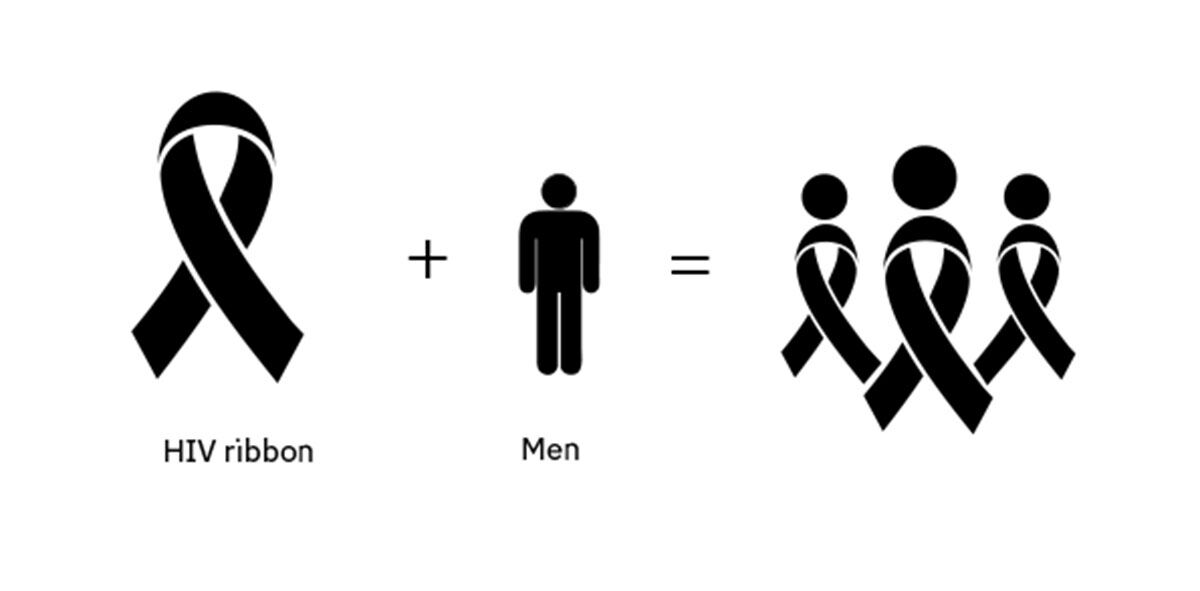
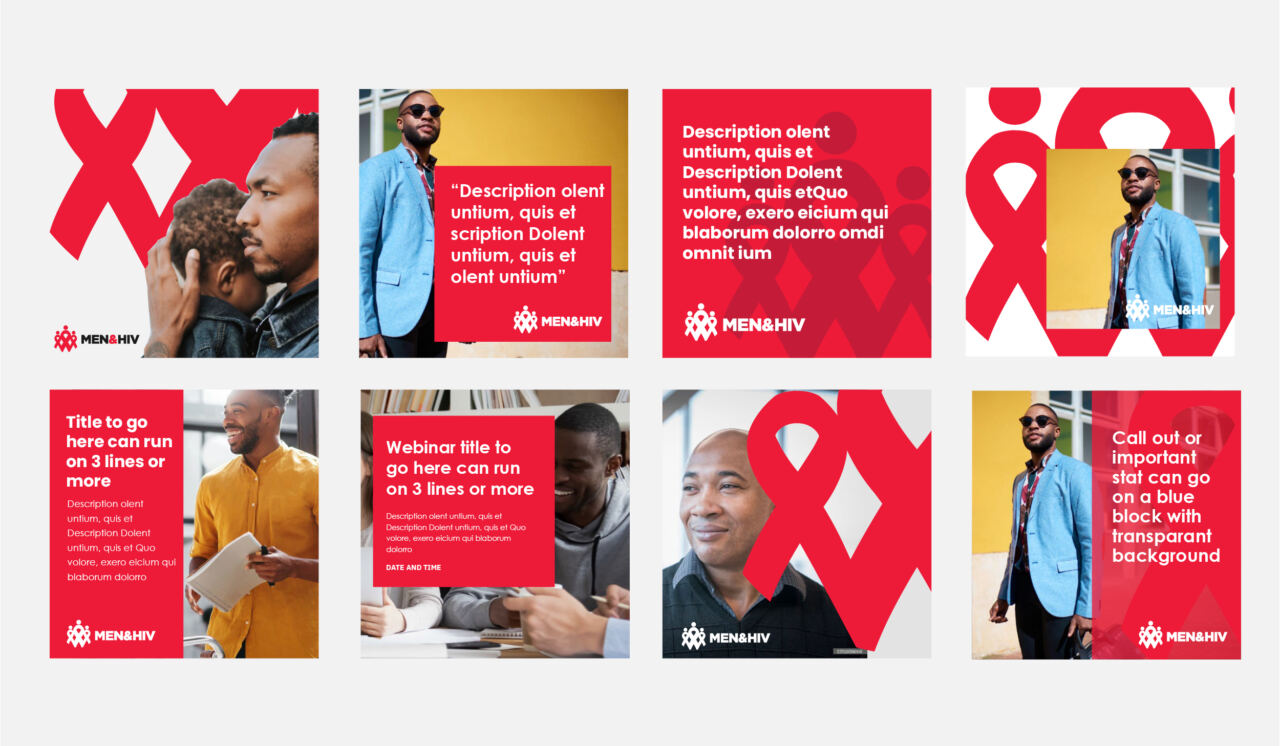
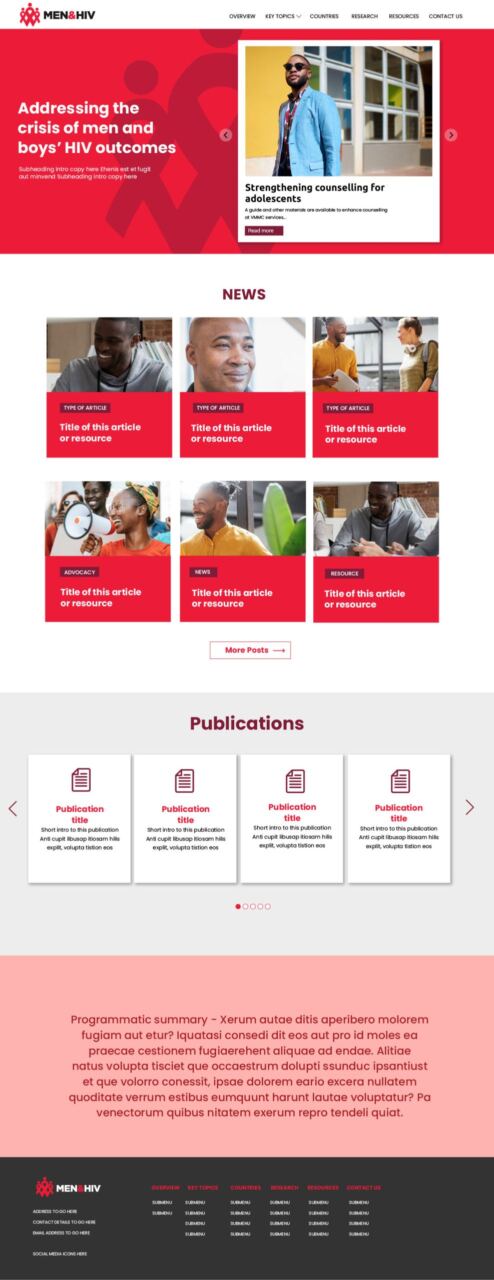
We started with the identity. The Men & HIV mark combines the HIV awareness ribbon with the figure of a man, repeated into a group, so the symbol says at a glance who the work is about. In a strong red, it carries across the website, social media templates and campaign material. The website was built as a research hub, organised by key topics, countries, research and resources, so a busy programme manager or policy maker can go straight to what they need.
A research hub, not a brochure
The homepage leads with the latest research and news, with publications one click away and every story tagged by topic and country.
The process
In Eastern and Southern Africa, the HIV response has made huge progress, but it has largely left boys and men behind. Men are less likely to test, to start treatment early and to stay on it. That costs their own lives, and keeps HIV moving through their relationships and communities. Reaching men is now seen as essential to ending AIDS in the region.
Sonke Gender Justice, a long-standing partner of ours, and UNAIDS formed a partnership to put men and boys at the centre of that effort. Research and good practice on reaching men existed, but it was spread across organisations, countries and formats, and the partnership itself had no public face.
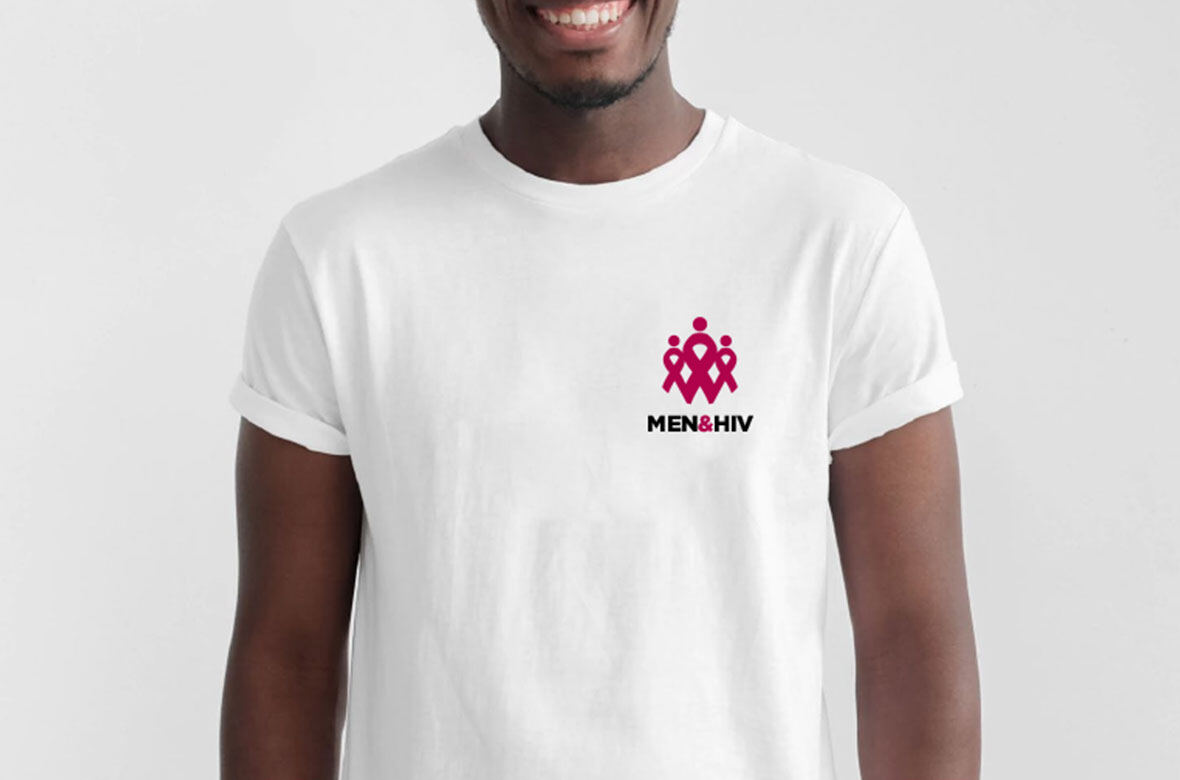
We created the Men & HIV identity first. The mark joins the HIV ribbon with the figure of a man, and repeats it into a group of figures, a simple symbol of men taking part in the response together. We built it out into a bold red pattern, social media and campaign templates and merchandise.
The website followed in 2019: a research hub, not a brochure. Until 2024 it brought together news, publications and resources, organised by key topics and by country, so practitioners and policy makers could keep up with the latest evidence in one place. It sat alongside the Sonke website, which we supported for more than ten years.
What the client got
One identity and one hub for a neglected side of the HIV response
From 2019 to 2024, practitioners and policy makers had one place to keep up with the latest developments on men and HIV in the region, and the partnership had a clear, recognisable identity for its research, events and campaigns.