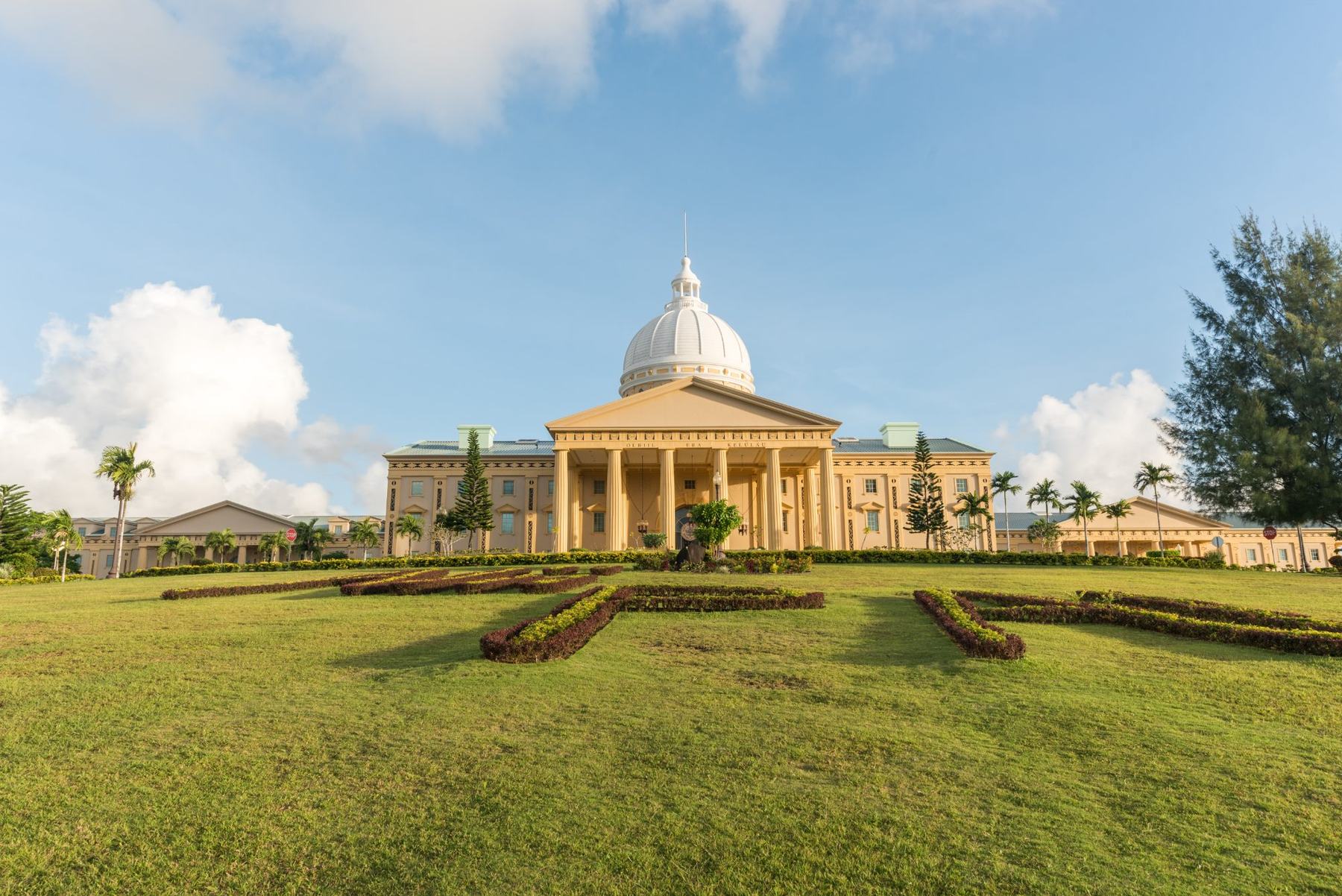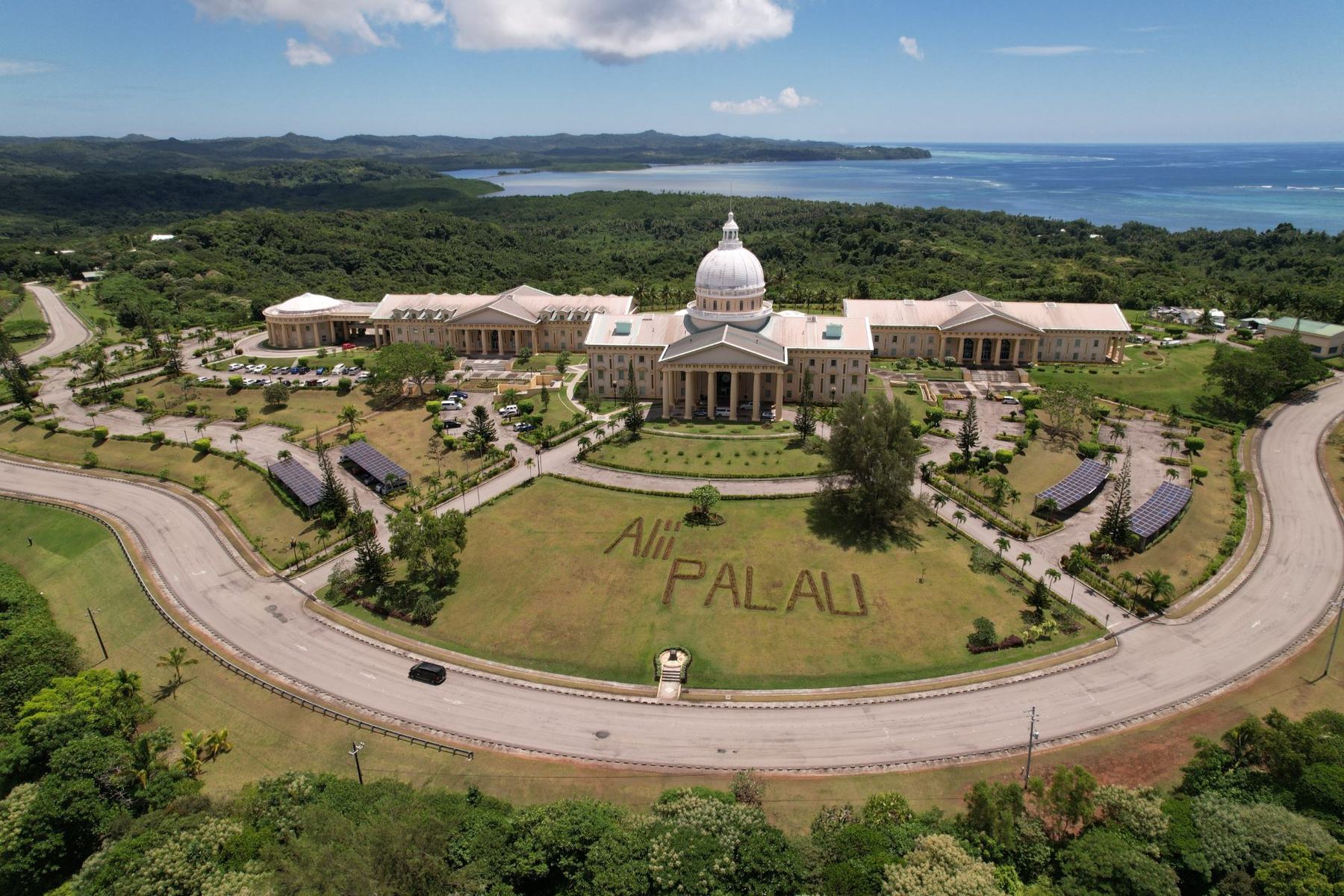
Pacific legislatures, open to the people they serve
Five legislature websites, with brand and support, for the UNDP Pacific Office.
Five legislatures, seven chambers
Each square is a chamberThe need
Who they needed to reach
Citizens, community groups, businesses, media and other interest groups in Palau and four FSM states
What stood in the way
People have a right to see how the laws they live by are made, but Palau and three of the four FSM states had no website to show them. Citizens could not easily find out who represented them or what was being decided in their name, and community groups, businesses and the media could not follow the bills that would affect them while there was still time to speak.
What success looked like
Anyone able to follow the work of their legislature, and participate in the legislative process.
How we met the need
We treated each website as the legislature's public record, built around the two journeys people take to hold their representatives to account: finding out who represents them, and following a bill from introduction to decision. Each legislature's own staff keep that record, because a public record is only trusted while it is current.
Two journeys shape every site
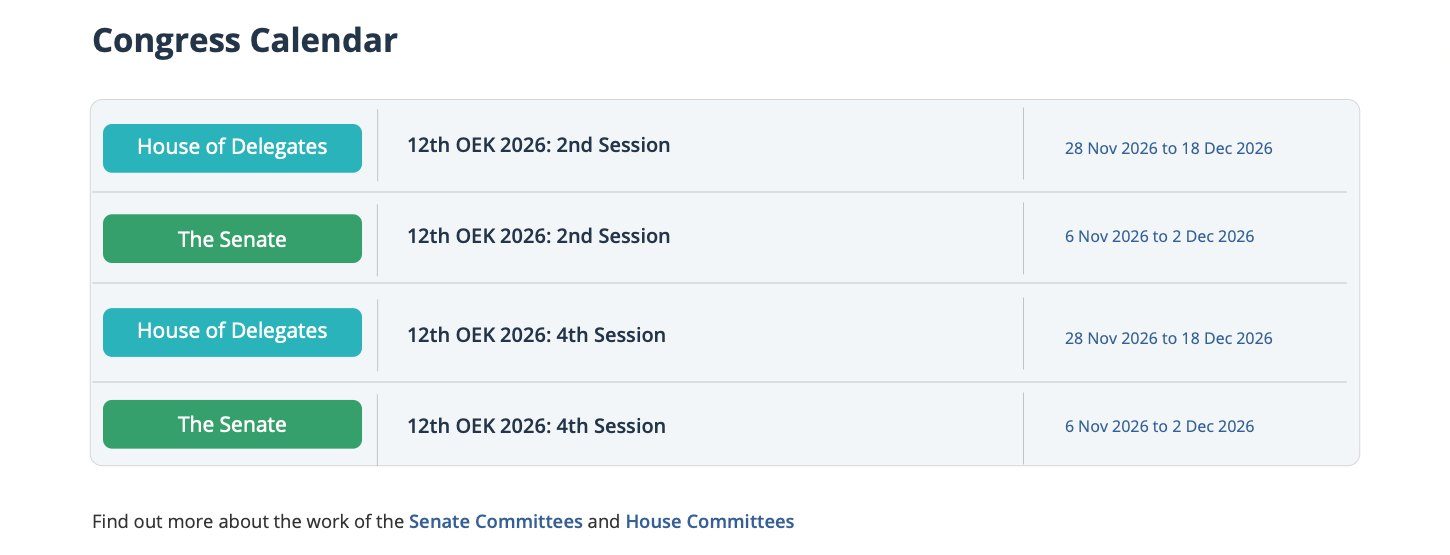
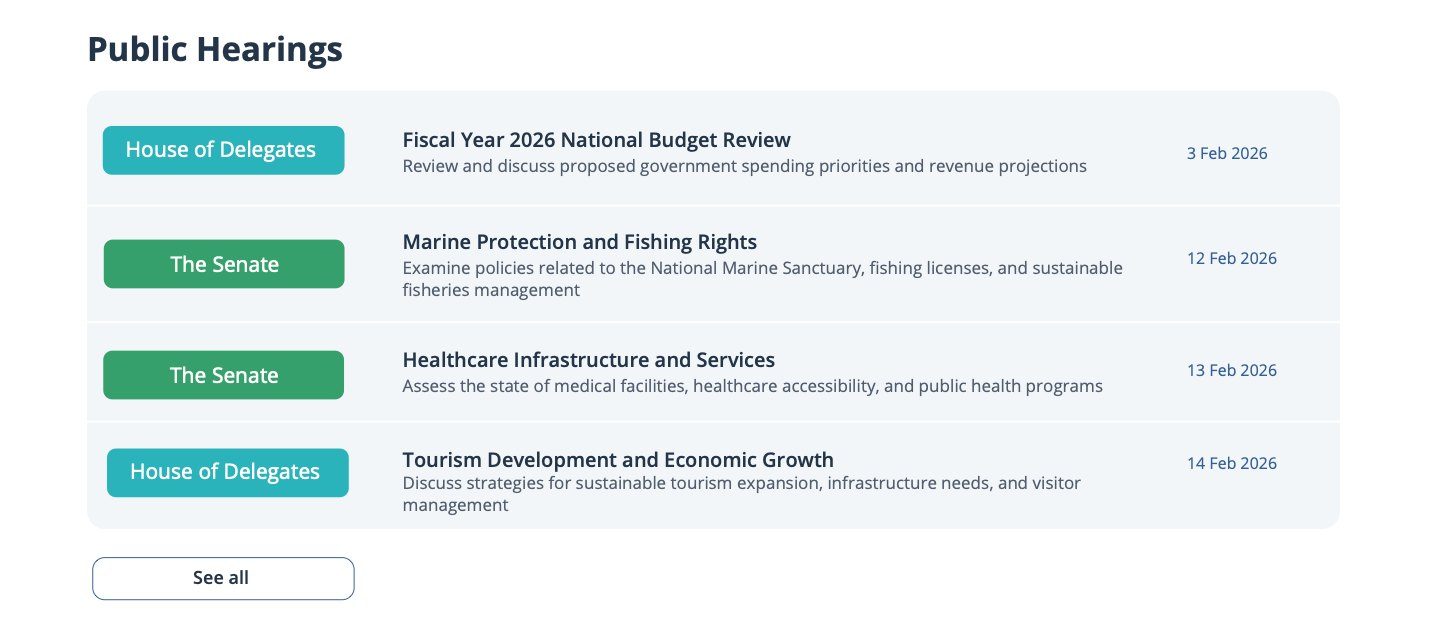
Who represents me, and what is happening to this bill.
The process
UNDP came to us with five legislatures, each needing its own website. Together we set the goal by the people those websites serve, not by the number of pages. In each legislature we began by asking who it serves and what those people need from it, and clerks, information officers and IT staff agreed who would keep each part of the record accurate.
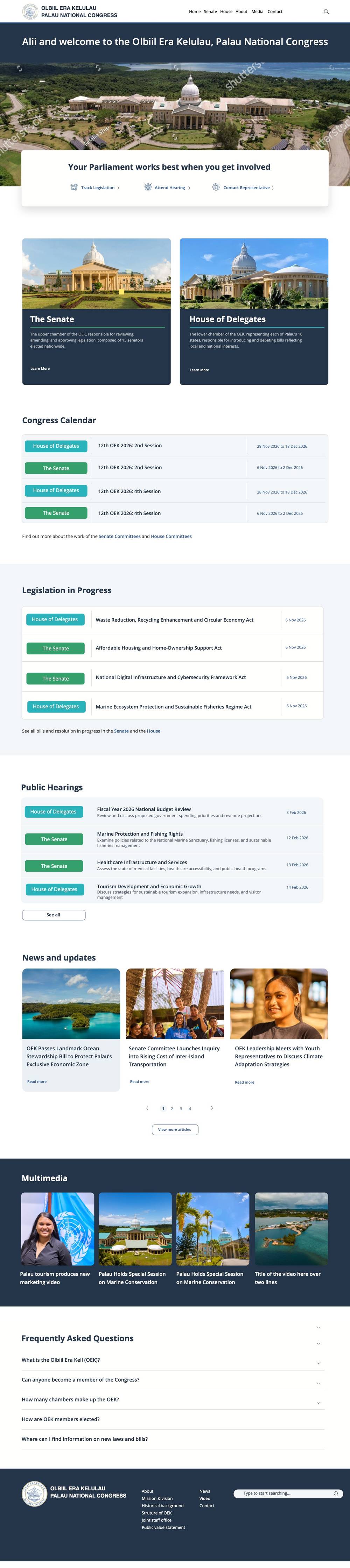
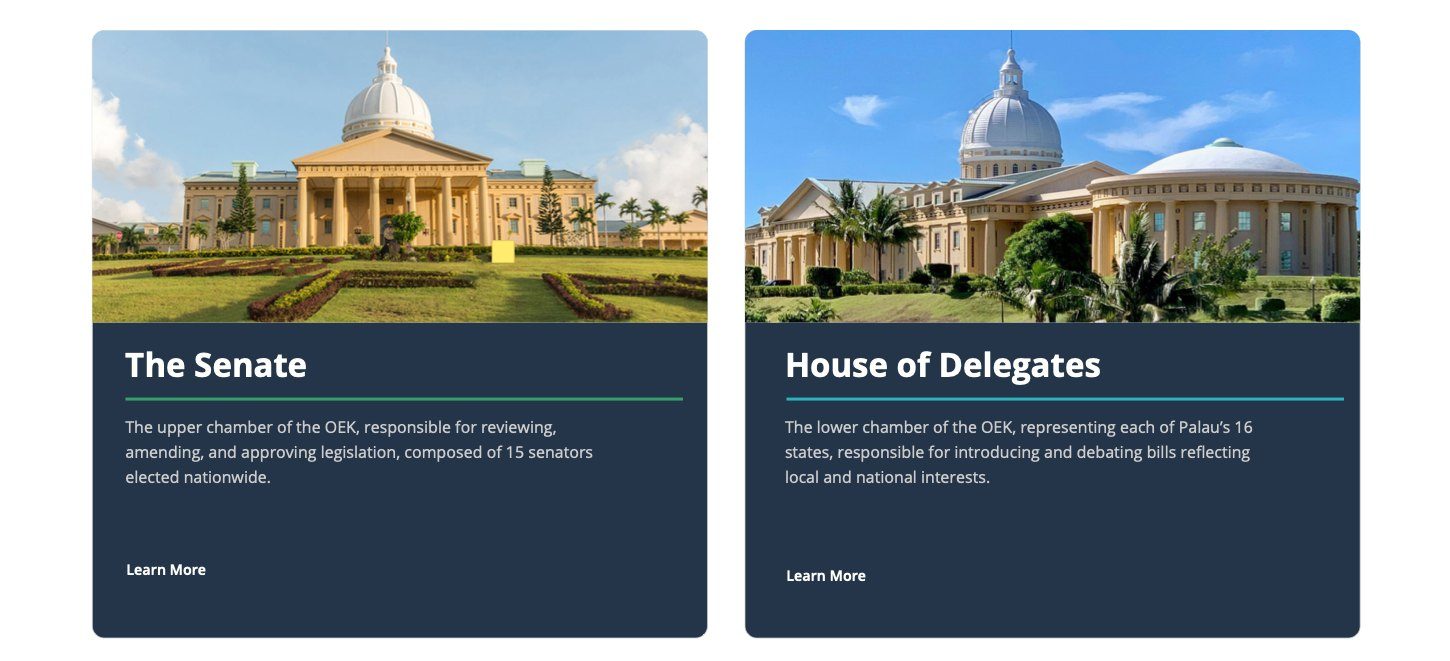
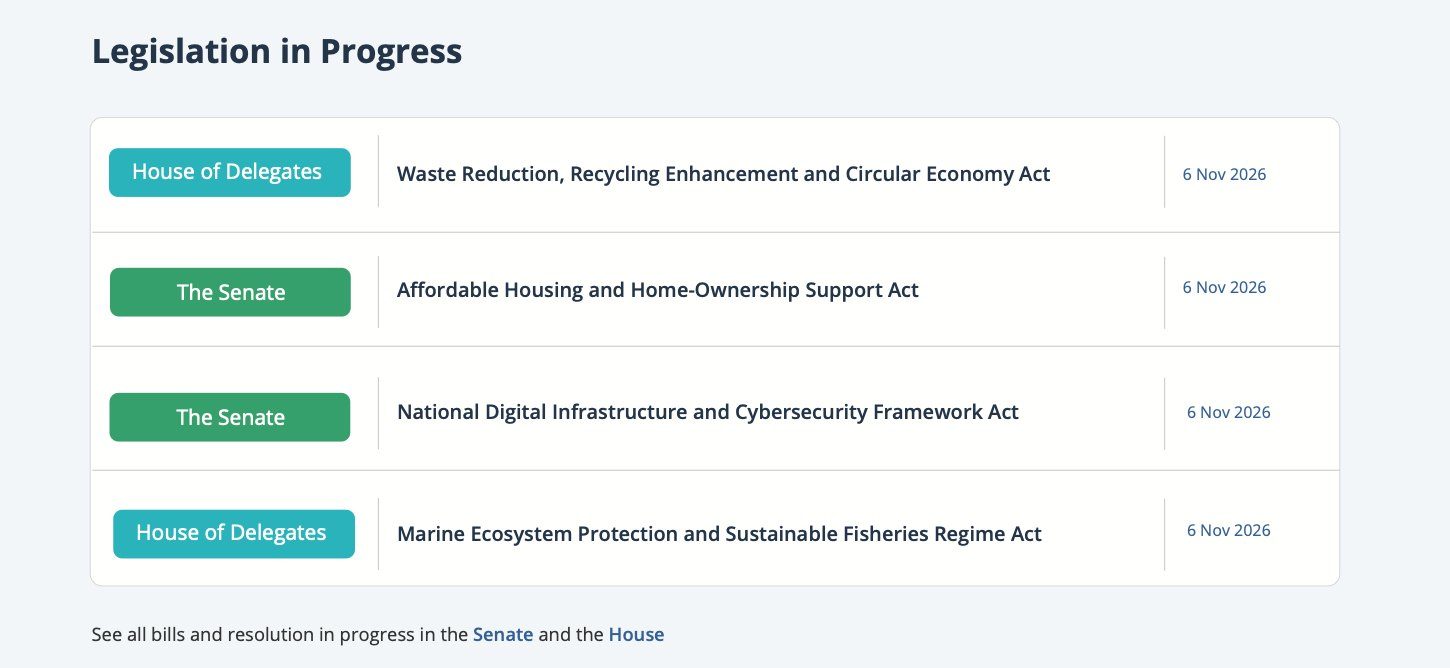
The design follows the two journeys: who represents me, and what is happening to this bill. Each bill and resolution sits alongside the members and committees responsible for it, so anyone following an issue can see who is behind it. Each legislature has its own design, reflecting its institution and heritage, within a shared framework built to the Inter-Parliamentary Union’s guidelines for parliamentary websites.
We built the sites for each legislature’s own staff to run, and trained them on their own content, so the record stays current long after the project ends. Each site went live once it was ready to serve the public; the last of the five launched in August 2026.
How it ran
- Nov 202501First conversation
We set the goal by the people the sites serve, not the number of pages: every citizen able to see what their legislature is doing.
- Nov 202502Discovery
Each legislature began by naming who it serves and what they need, then agreed who keeps each part of its record current.
- Nov 2025 to Feb 202603Design
Two journeys shape every site, who represents me and what is happening to this bill, in a design each legislature recognises as its own.
- Mar to Apr 202604Build and produce
Built for each legislature's own staff to run, so the record stays current after the project ends.
- Apr to Aug 202605Launch and handover
Each site went live once it was ready to serve the public; the last in August 2026.
What the client got
Anyone in Palau, Pohnpei, Chuuk, Kosrae and Yap can now follow the work of their legislature, and participate in the legislative process: who represents them, what is before them, and what has been decided. Five small legislatures now have websites built to international guidelines, and keep their public record current themselves.