South Africa's coalition councils, tracked in one place
A data, news and analysis website for ACCORD, designed, built and maintained by ThinkTeam.
The need
Who they needed to reach
Residents and voters, journalists, researchers, political parties, councillors and officials, and the organisations that support local government in South Africa
What stood in the way
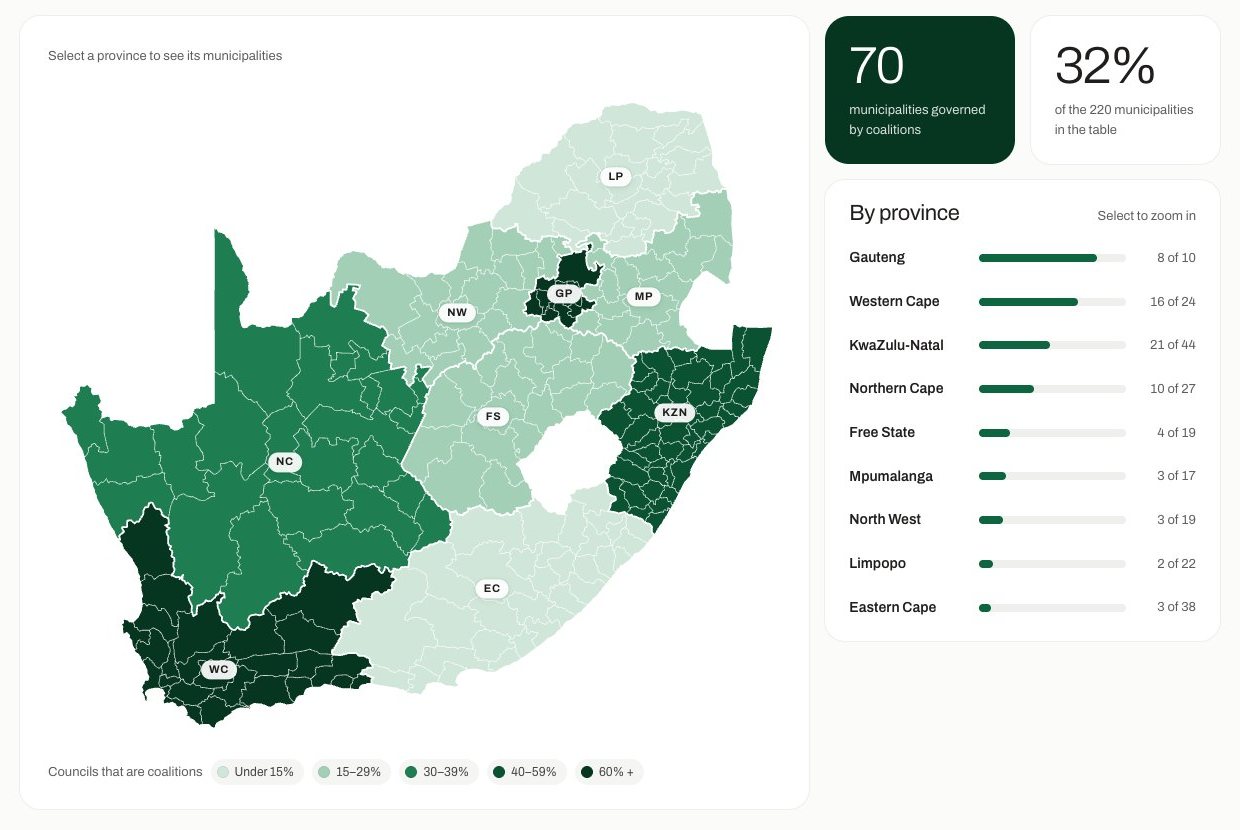
After the 2021 local elections, 70 of South Africa's 220 councils were run by coalitions, up from 27 in 2016. Coalitions decide who becomes mayor, who chairs the committees and whether the budget passes, and some councils have changed mayors several times since 2021. The information people needed to follow this was scattered across council minutes, news reports and research. With more hung councils expected after the 4 November 2026 elections, ACCORD wanted one place where anyone could see who governs each council and how stable that partnership is.
What success looked like
Anyone able to find out who governs their council, which parties work together, who holds the key positions and how stable the coalition is.
How we met the need
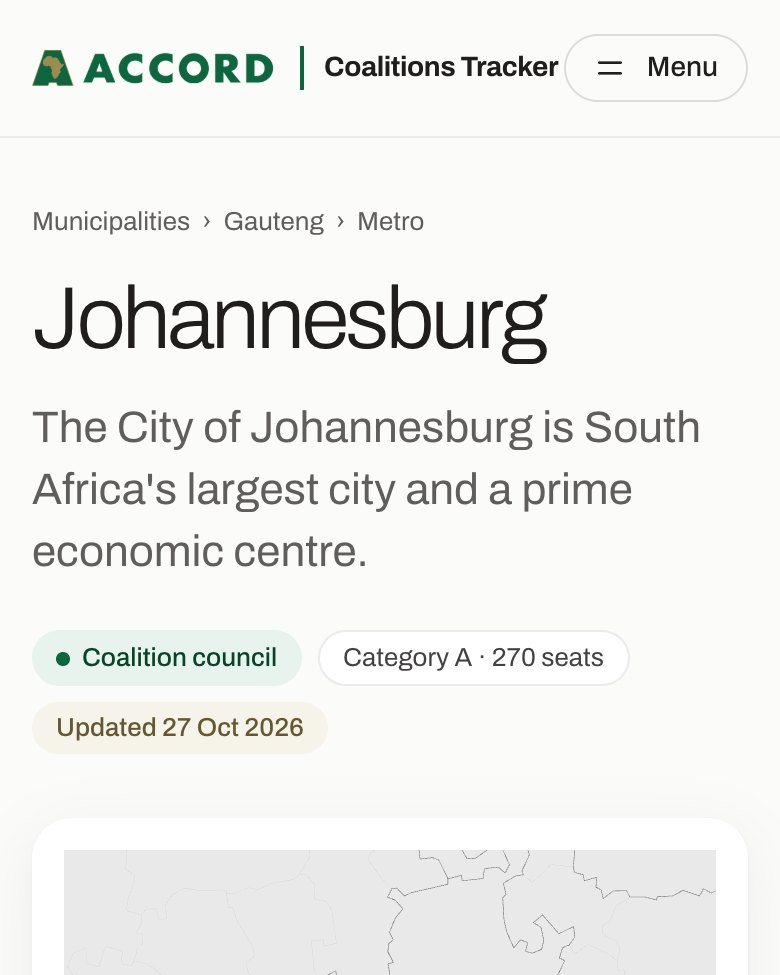
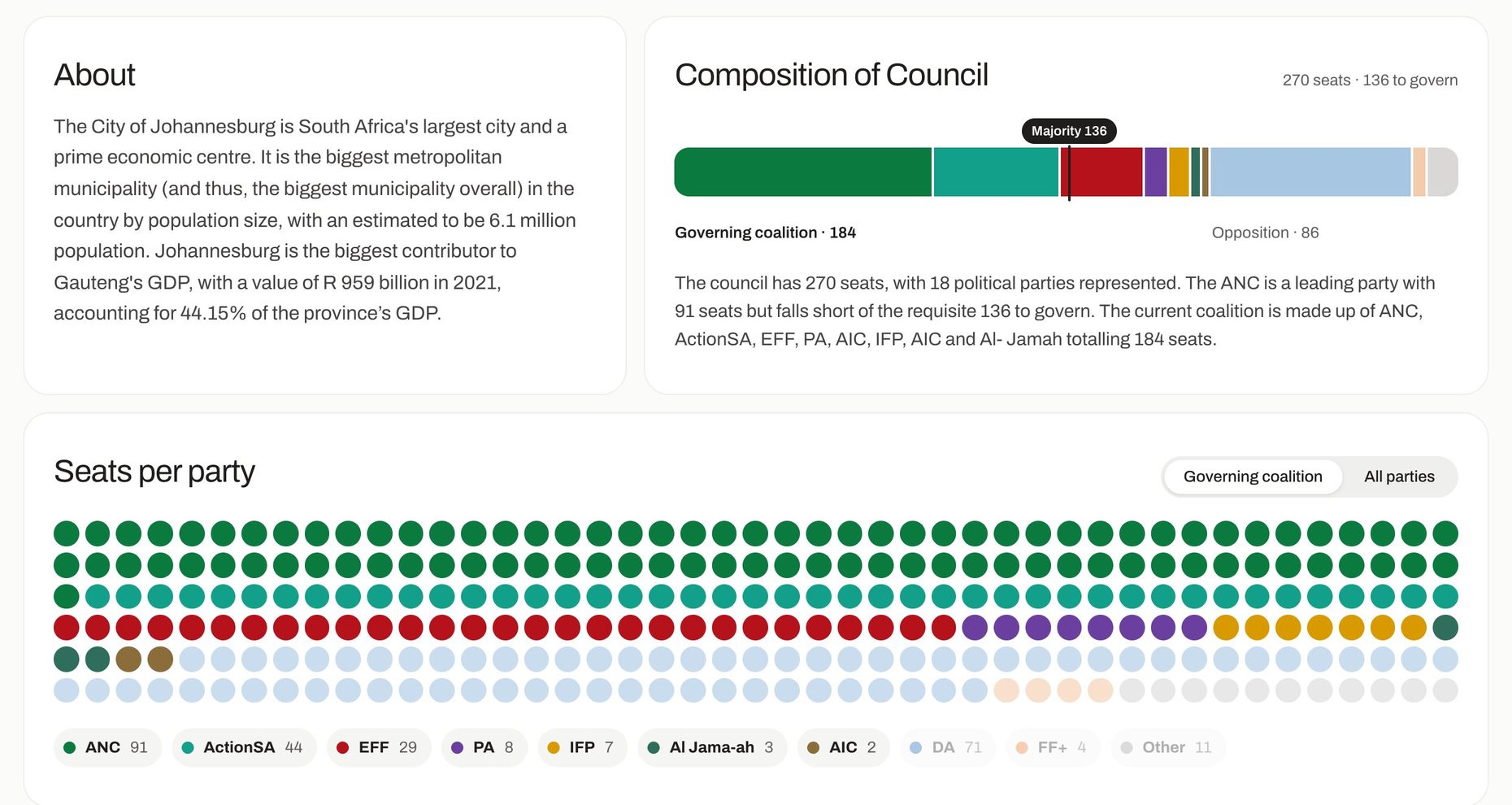
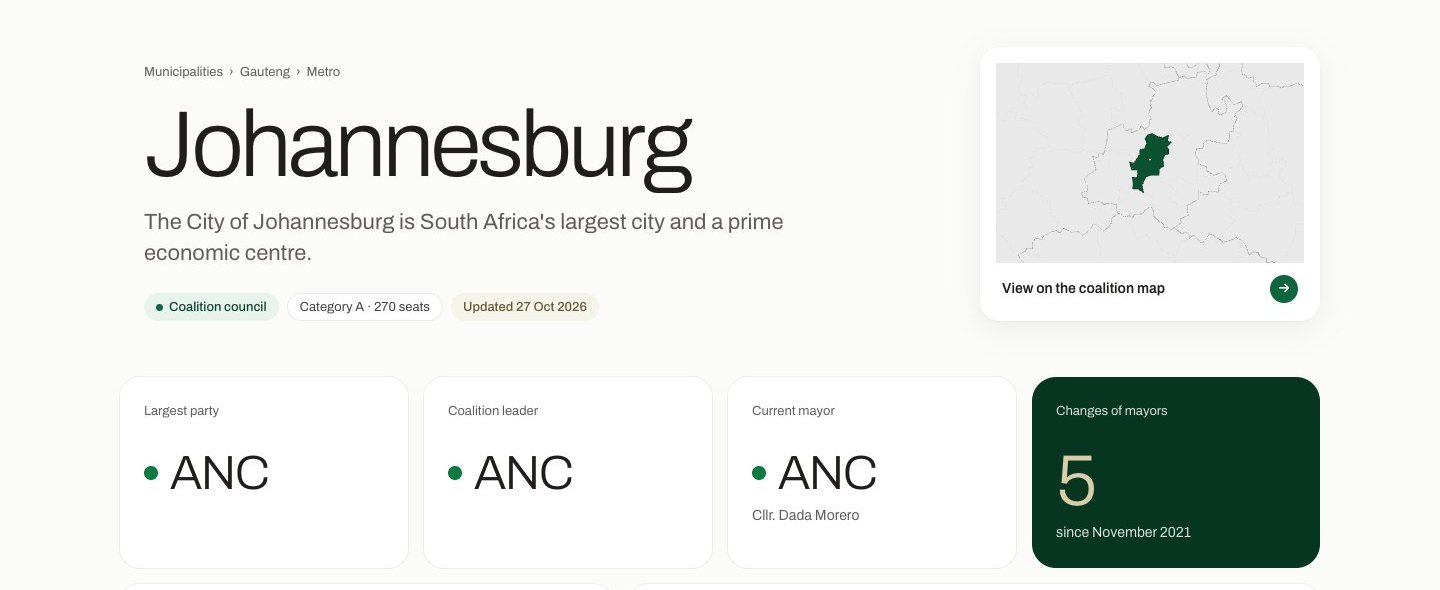
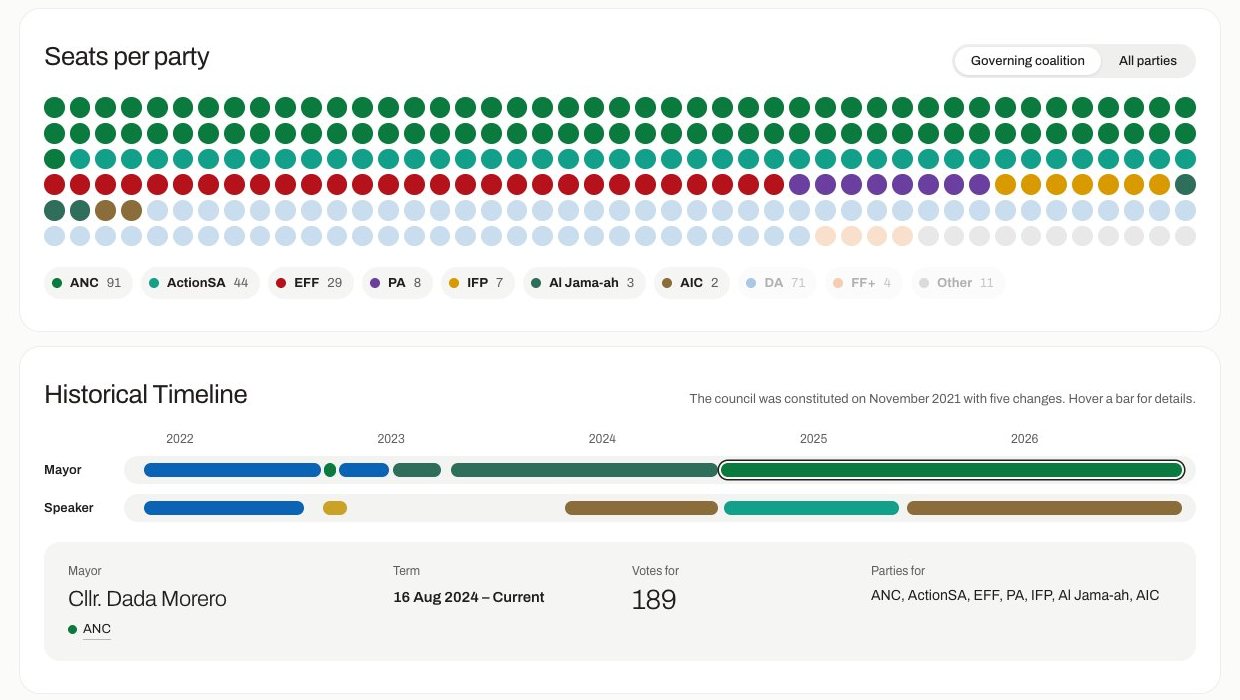
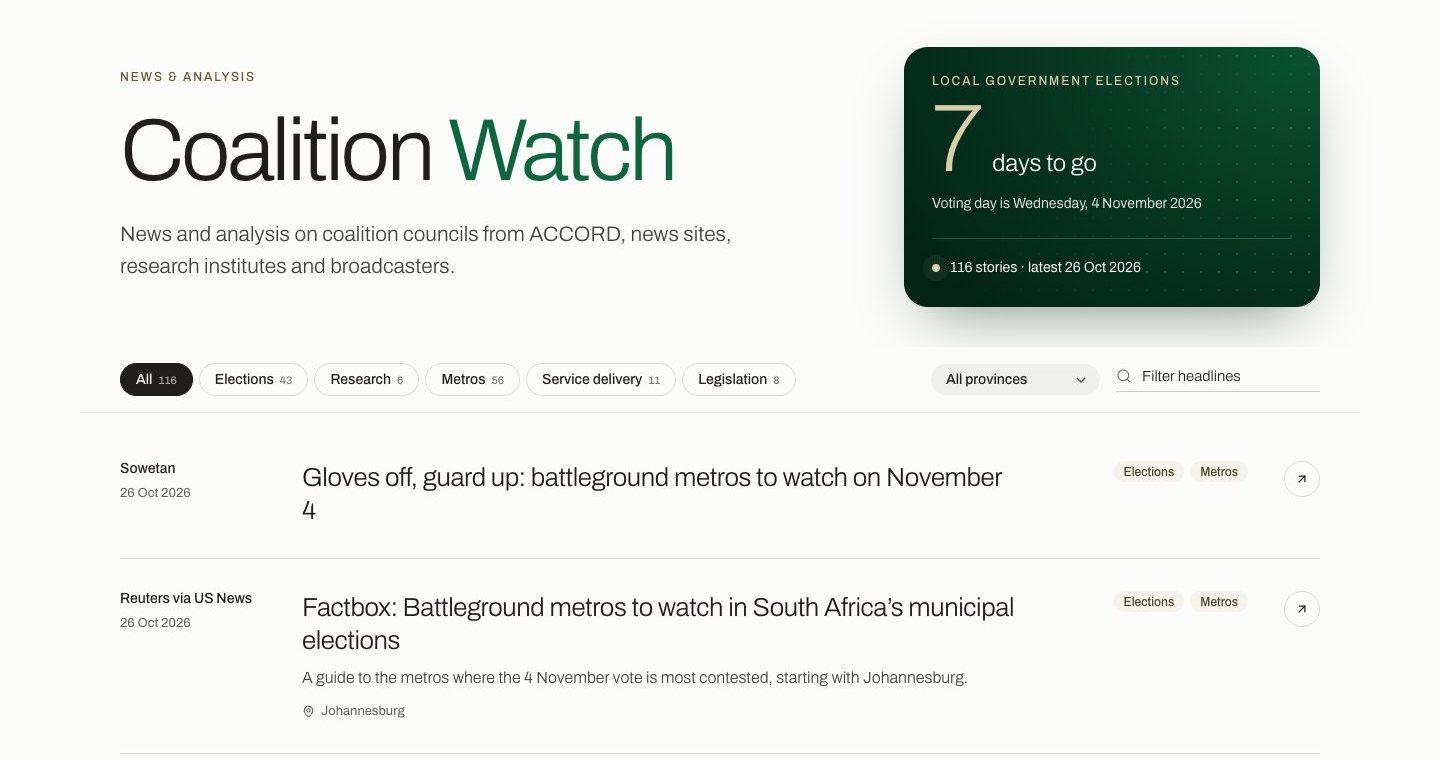
We organised the website around the questions people ask about a coalition council, not around the data. Each council has its own profile, with the seats each party holds, the governing coalition, the people in key positions and a timeline of every change of mayor and speaker. A map shows where coalitions govern, party pages show where each party leads, Coalition Watch gathers news and analysis from across the media, and five plain-language explainers cover what coalitions are and what to expect from the 2026 elections.
Every council, one profile
Who governs, who holds the seats, and how stable the partnership is.
The process
Since 2016, more and more of South Africa’s councils have been governed by coalitions. When no party wins a majority, two or more parties have to agree on a mayor, a speaker and a budget, and when those agreements break down, the services residents depend on suffer. ACCORD, which has worked on conflict and mediation since 1992, runs workshops on managing conflict in coalition governments. It wanted a public resource that would let anyone follow how those coalitions are working.
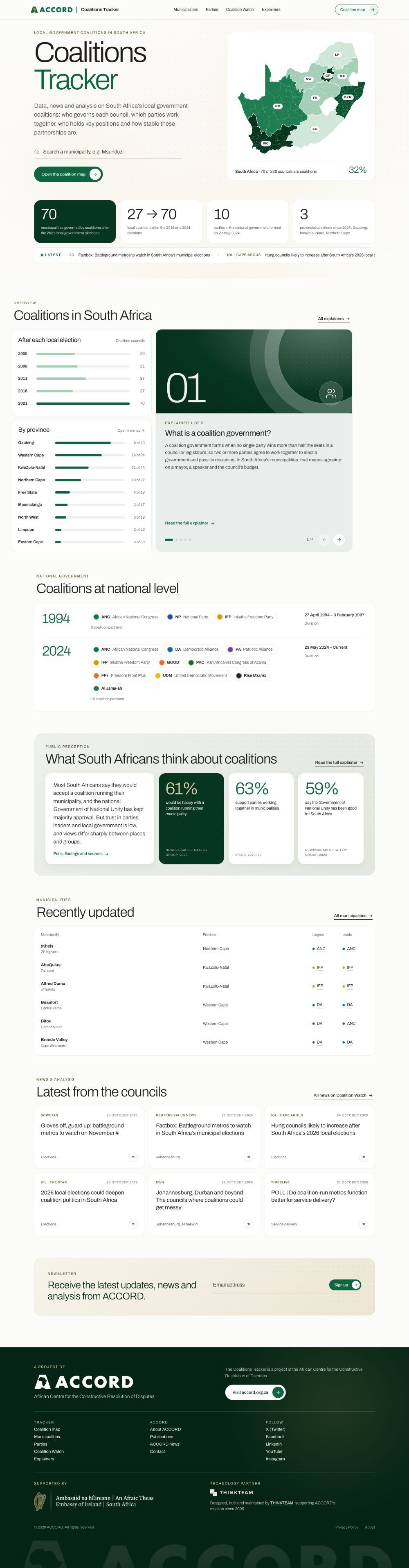
We built the Coalitions Tracker around the questions people bring to it: who governs my council, which parties are working together, who holds the key positions and how stable the arrangement is. Each council has a profile that answers those questions on one screen, with the seats each party holds, the majority needed to govern, the people in key positions and a timeline of every mayor and speaker since 2021.
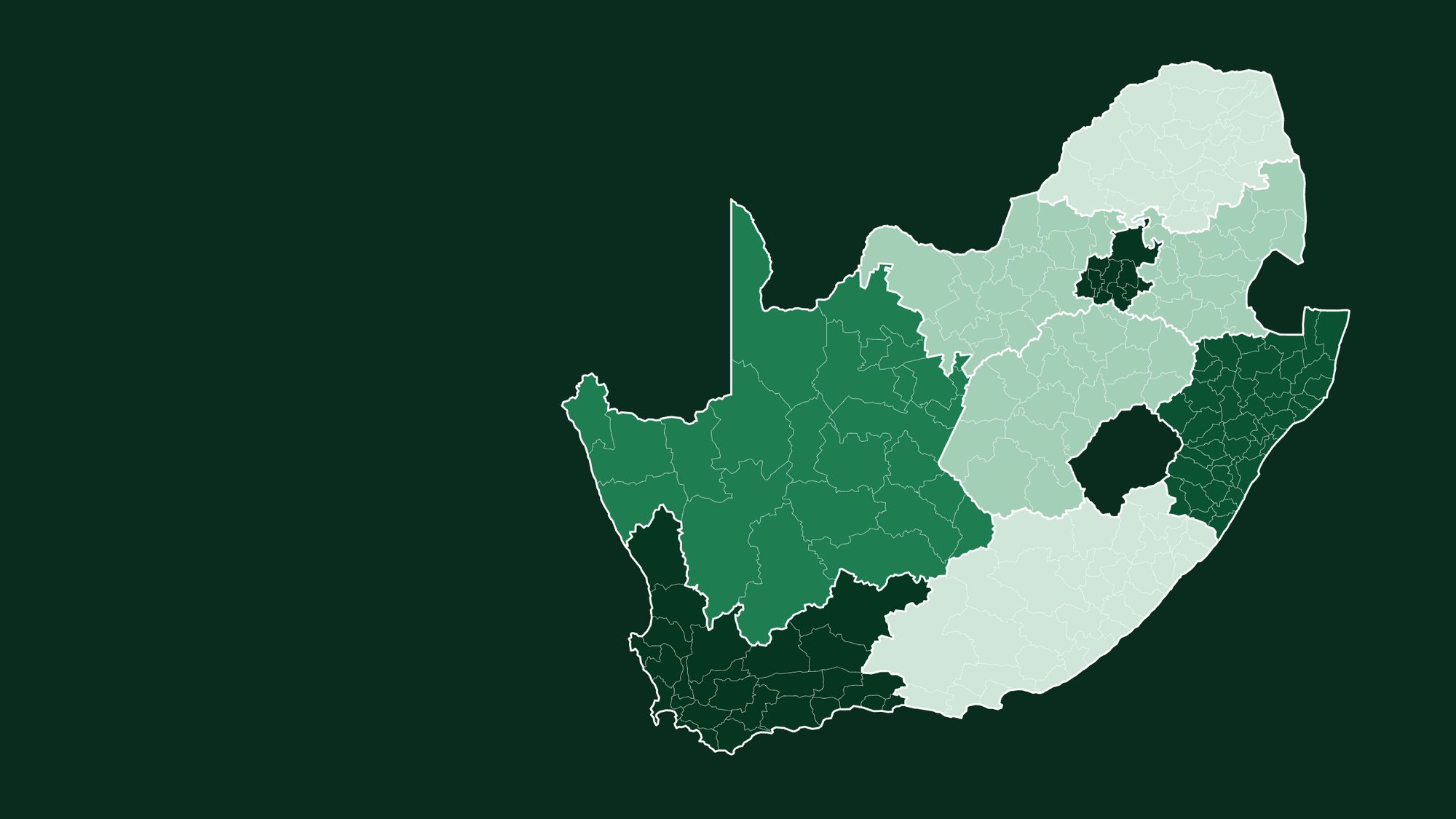
Around the council profiles, a map shows where coalitions govern across the nine provinces, party pages show where each party is the largest or leads the coalition, and Coalition Watch gathers news and analysis from ACCORD, news sites, research institutes and broadcasters, filtered by topic and province. Five explainers cover what a coalition government is, the history of coalitions in South Africa, why they matter, future trends and what to expect from the 2026 municipal elections, in plain language.
The tracker is a project of ACCORD, supported by the Embassy of Ireland in South Africa. We designed, built and maintain it as part of our 25-year partnership with ACCORD.
What the client got
Ahead of the 4 November 2026 local elections, anyone in South Africa can see who governs each coalition council, which parties work together, who holds the key positions and how often the council has changed its mayor. Journalists, researchers and residents can follow the news on each council in one place, and ACCORD has a public resource that supports its work on managing conflict in coalition governments.
Visit the live site ↗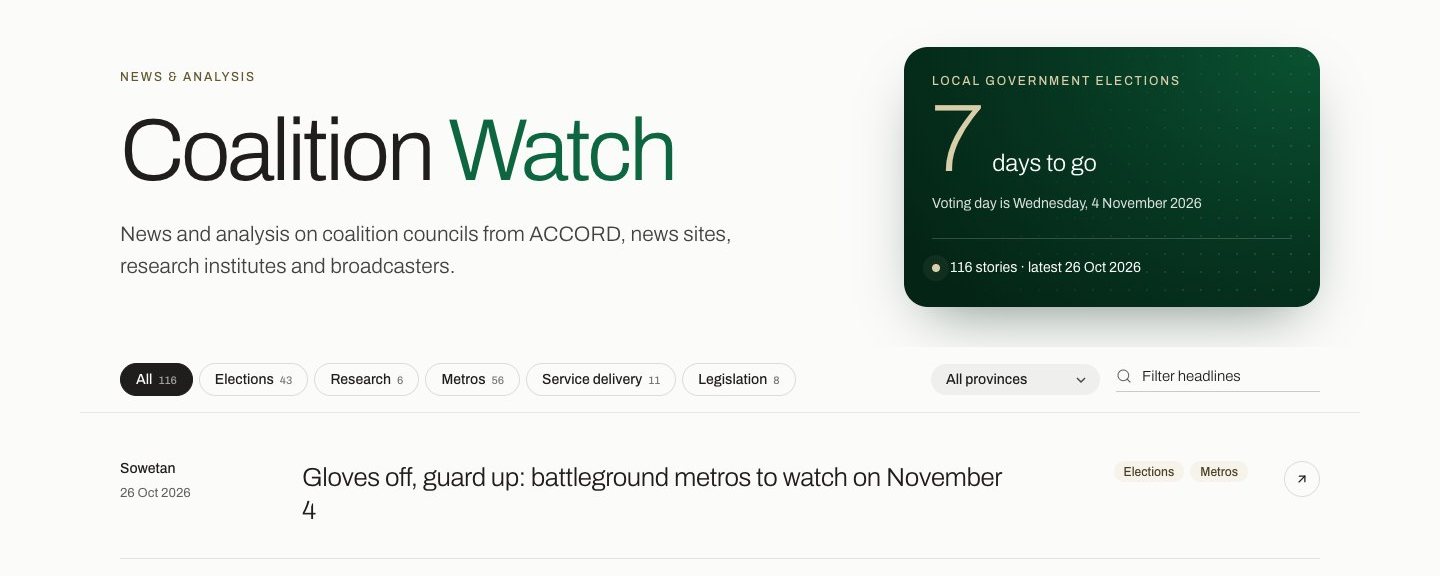
Related work
A full-service partnership across 25 years

4 of 5 legislatures online for the first time

A peace process on record